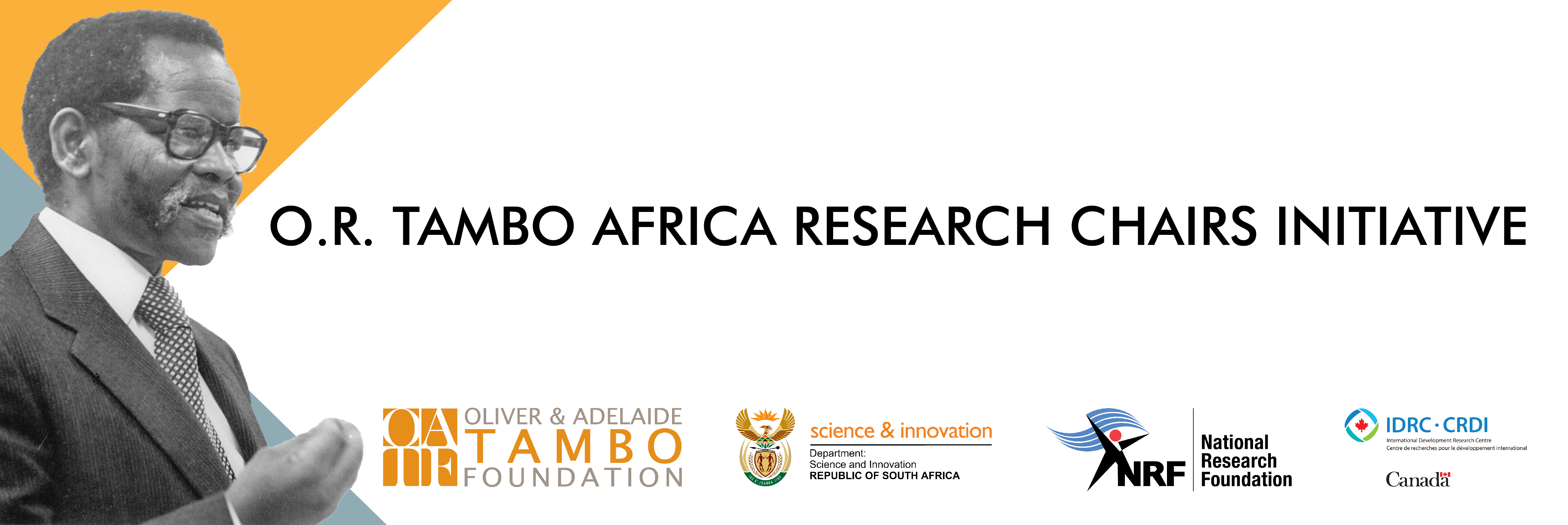
Welcome to the O.R. Tambo Africa Research Chair in Infectious & Neurological Diseases Webpage
The overall objective of this Chair is train and retain a cadre of African physicians who will contribute to Africa’s human and institutional capacity development in prevention, therapy, and research on infectious diseases after undergoing rigorous catalytic research skills training. The program is aimed at training a cadre of next generation and emerging researchers in infectious diseases.
The Oliver Reginald Tambo Research Chair Initiative (ORTARChI) has been established across 7 African countries, including: Botswana, Burkina Faso, Ghana, Mozambique, Tanzania, Uganda and Zambia. In Uganda, the research chair holder is hosted at Makerere University.
The project will run between May 2025 – May 2029 and directly benefits trainees enrolled in Masters’ and Doctoral programs, young and mid-career researchers, and infectious disease physicians. Indirect beneficiaries are the university, communities of practice of qualified physicians, patients, health workers, and community members,
The project is funded by the National Research Foundation (NRF), South Africa, Uganda National Council for Science and Technology (UNCST) and Makerere University and implemented by the Infectious Diseases Institute in partnership with Mbarara University of Science & Technology (MUST) in Western Uganda, the University of Minnesota, and the Centre for the AIDS Program of Research in South Africa (CAPRISA).
Project Brief
This Research Chair offers multidisciplinary training in areas such as immunology, epidemiology, biostatistics, pharmacology, leadership, and quality improvement, using existing research platforms and infrastructure. It is designed to guide young medical graduates toward research careers, rather than purely clinical paths, and includes a tiered mentorship system to strengthen research guidance and support.
Did You Know? / Key Context Facts
- Infectious diseases and neglected tropical diseases remain among the leading causes of illness and death across Africa, including malaria, tuberculosis, HIV/AIDS, cholera, meningitis, Ebola, and other emerging infections.
- Neuro-infections such as cryptococcal meningitis and TB meningitis are among the leading causes of death in people living with HIV in sub-Saharan Africa, yet they remain under-researched and underdiagnosed.
- In Uganda, approximately 12% of medical admissions at the national referral hospital are due to infections affecting the brain and central nervous system.
- Strengthening local research and training is essential to improve diagnosis, treatment, and preparedness for emerging infectious disease threats across Africa.
Key Project Outcomes
- 4-6 Masters students enrolled and graduated & 2-4 PhD trainees enrolled; 4 Postgraduate research fellows trained per annum.
- Development of an Infectious Disease fellowship curriculum and launch of this specialty program affiliated with the Department of Medicine, the Infectious Diseases Institute at Makerere University and other external partners to be awarded by the East Central and Southern Africa College of Physicians.
How Does the Research Chair Program Work?
The Research Chair in Infectious Diseases and Neurological Diseases strengthens research capacity by supporting talented early-career clinicians and researchers to become future leaders in infectious disease research. Building on an established neuroinfectious disease research platform, the program provides hands-on research training, mentorship, and opportunities to conduct high-quality research.
The program works through strong partnerships between Makerere University, Mbarara University of Science and Technology (MUST), the University of Minnesota, and CAPRISA. It primarily supports Master of Medicine students, recent MMed graduates, and early-career researchers, helping them develop research skills, receive structured mentorship, and pursue academic and research careers while contributing to solutions for infectious diseases and neurological disorders.
key activities include: training workshops, curriculum development, research project implementation and dissemination.
Project Story
The O.R. Tambo Africa Research Chair in Infectious Diseases and Neurological Diseases is investing in people who will shape the future of health research in Africa. Inspired by Oliver Tambo's vision of African unity and self-reliance, the Chair supports early-career clinicians and researchers to develop the skills, confidence, and mentorship needed to address the continent's most pressing health challenges.
Sustainability and Scaling
The O.R. Tambo Africa Research Chair is designed to create lasting impact by strengthening research capacity that extends well beyond the funding period. Through structured mentorship, hands-on research training, and the development of early-career researchers, the program establishes a sustainable pipeline of future research leaders who will continue to mentor others and advance high-quality research.
The model will provide a blueprint for establishing Uganda Research Chairs in priority areas of national importance. Lessons and best practices from the program will inform a sustainable national research chair model that supports long-term investment in research excellence, develops specialized expertise, and strengthens the country's research and innovation ecosystem.
Scientific Advisory Committee
Independent governance, rigorous peer evaluation, and trainee mentorship are provided by an eight-member committee:
- Dr. Andrew Kambugu – Executive Director, Infectious Diseases Institute (IDI)
- Prof. Harriet Mayanja-Kizza – Department of Internal Medicine, MakCHS
- Prof. Mark Kaddumukasa – Department of Internal Medicine, MakCHS
- Assoc. Prof. Irene Andia-Biraro – Department of Internal Medicine, MakCHS
- Dr. Christine Sekaggya – Directorate of Internal Medicine, Mulago National Referral Hospital
- Dr. Grace Kansiime – Department of Internal Medicine, Mbarara University of Science and Technology (MUST)
- Dr. Sabrina Bakeera-Kitaka – Department of Paediatrics and Child Health, Makerere University
- Prof. Kogie Naidoo – Deputy Director, Centre for the AIDS Programme of Research in South Africa, South Africa
- Prof. David R. Boulware – Department of Medicine, University of Minnesota, USA

Head of Unit
Chairholder Profile
David B. Meya, PhD, FRCP
Associate Professor, Department of Medicine, Makerere University College of Health Sciences
Adjunct Professor, University of Minnesota & University of Rochester
Prof. David Meya, an Associate Professor in the School of Medicine at Makerere University, holds adjunct appointments at the University of Minnesota and University of Rochester. He specializes in clinical research of central nervous system infections and complications, particularly HIV Immune Reconstitution Inflammatory syndrome (IRIS), a deadly complication of antiretroviral therapy (ART) in people with AIDS.
He has led epidemiological and translational research studies and randomised clinical trials in Uganda, collaborating with colleagues from the University of Minnesota and institutions in Botswana, the UK, Indonesia, the Netherlands, Zimbabwe, and Malawi. Prof. Meya is also interested in public health interventions to prevent meningitis at a population level.
He advocates for cryptococcal antigen (CrAg) screening to reduce deaths and hospitalizations from cryptococcal and TB meningitis. He has championed efforts to implement national CrAg screening in Uganda in collaboration with the Ministry of Health, Clinton Health Access Initiative (CHAI), the Central Public Health Laboratories, and the US CDC. He chairs the Advanced HIV Disease Technical Working Group at the Ministry of Health and leads local collaborations between two regional referral hospitals and the Infectious Diseases Institute at Makerere University.
He has been the Principal Investigator on several NIH, CDC, UK MRC, and Industry sponsored grants and is also involved in advocacy to improve clinical care and outcomes for people living with HIV with limited resources, focusing on advanced HIV disease. His collaboration with colleagues at the University of Minnesota since 2005 has resulted in over 300 publications and resulted in revision of international guidelines on HIV-related meningitis.
He is passionate about training and mentoring the next generation of African physician scientists believing that the solutions to infectious diseases burden in Africa lie in partnerships and training the next generation.
Contacts
Assoc. Prof. David Meya, PhD, FRCP
Research Chair, Infectious and Neurological Diseases,
Makerere University
david.meya[at]mak.ac.ug
Ms. Belinda Twesigye, BEHS, MPH
Research Training Programme Coordinator
Department of Internal Medicine,
Makerere University
btwesigye[at]idi.co.ug
Ms. Aidah Nanvuma, BNS, PGD, MPH
Capacity Building Coordinator,
Research Department, Infectious Diseases Institute
ananvuma[at]idi.co.ug