Dr. Arthur Mpimbaza of the Child Health and Development Centre (CHDC), Makerere University College of Health Sciences (MakCHS), is leading a team of researchers in the development of a health system strengthening (HSS) strategy to eliminate malaria deaths in Uganda. The strategy is being piloted in Bunya East Health Sub District (HSD), Mayuge District and is funded by the Government of Uganda, through the Makerere University Research Innovation Fund. The strategy has been branded BUNIFU@HSS. Bunifu is a Swahili word meaning creativity. Two community engagement activities were conducted last year (2025) as part of the pilot project.
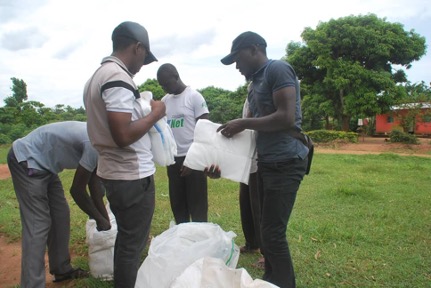
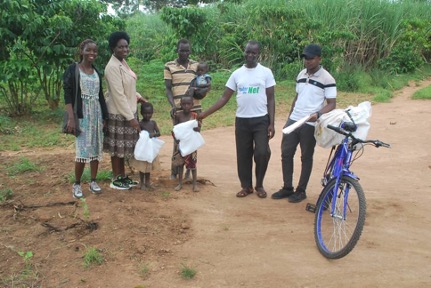
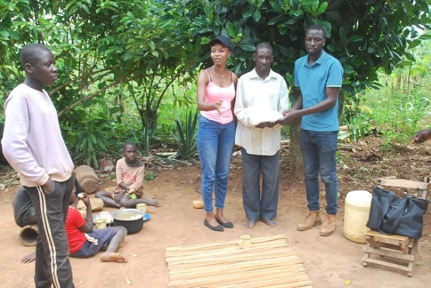
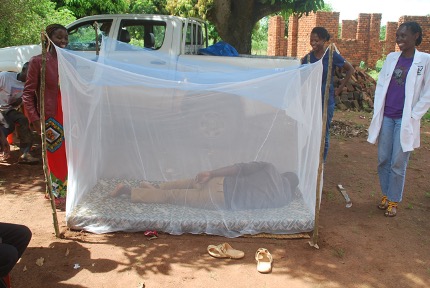
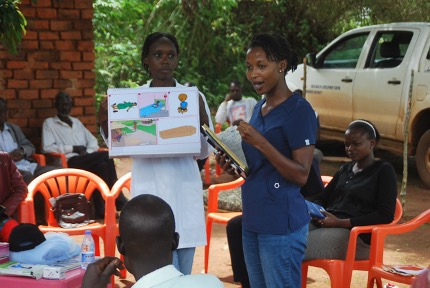
The first, a student’s lead project entitled ‘A Behaviour Change Campaign to Promote Benet Utilization and Maintenance in Namalege Village, Mayuge District, Uganda.’ The students involved were a group of 4th year medical students from MakCHS who undertook their community project embedded in the BUNIFU@HSS project. Implementation of a community project is part of the Community Based Education Research Services (COBERS) training program hosted at CHS. To maximise the students training experience, they were hosted and facilitated under the BUNIFU@HSS project. The student project was conducted in Namalege village, Bunya East HSD; purposively selected due to the high incidence of malaria in that village. The students successfully conducted a baseline malaria survey, a health proportional campaign focused on bed net use, and a bed net distribution campaign in the village. The students presented their project at the 18th Joint Annual Health Scientific Conference.
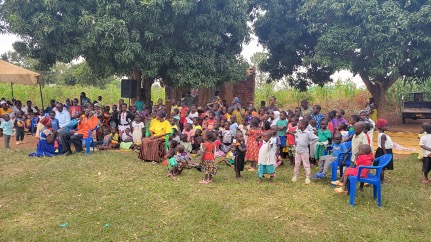
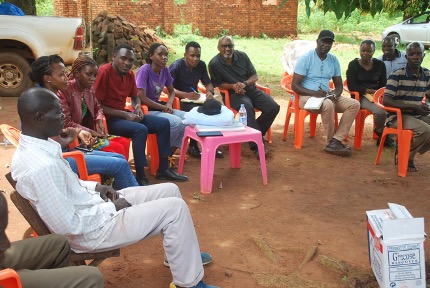
The second, was a community dialogue in Namalege village, an activity under the pilot project. The goal of the community dialogue was to engage community members to share challenges, experiences, and solutions in relation to malaria control. Over 500 residents of Namalege village turned up for the community dialogue. Additionally, the dialogue attracted a wide range of stakeholders, underscoring its importance. Among those present were officials from the Ministry of Health, including Dr. Maureen Amutuhaire, the national Integrated Community Case Management (ICCM) focal person, and Rukia Nakamatte, a Behaviour Change Communication expert from the National Malaria Elimination Division. District leadership and health managers also participated, including the Mayuge District Health Officer Dr. Asuman Basembeza. Health workers from Kigandalo Health Centre IV and Namalege Health Centre II, religious leaders, local council leaders, and hundreds of men, women, and children from the village attended the meeting grounds. Throughout the dialogue, community members openly discussed what they identified as major barriers to effective malaria care and why they get malaria. Themes that emerged during the dialogue included unapproachable health workers, misuse of mosquito nets particularly by community members, and a poor relationship between health care workers at public facilities and the community they serve.
At the end of the day, the community had spoken and were heard, as evidence by remarks of the Mayuge District Health Officer Dr. Asuman Basembeza District who mentioned “Your complaints have been heard by the healthcare workers and they have committed to improving.” In his remarks to the community, Dr. Mpimbaza echoed a quote from Prof Francis Omwasa, “Health is made at home and only repaired in health facilities when it breaks down”. Indeed, community engagement activities, such as this dialogue is one way of the empowering communities to better their health.